

Intelligent Transportation Systems and Evolution of Fare Collection
In addition to the revolutionary forces related to electronic payment systems, there are other technological forces acting on the Transit business such as the push toward the Intelligent Transportation System (ITS) paradigm. These technologies include; GPS, GIS, CCTV, Engine and Cabin Telemetry and on board Display and Location sensitive advertising. All of these technologies are adding to the opportunities and challenges to improving customer service, reducing operator cost and increasing profitability. If, however, all of these ITS components are point solutions, Transit operators will have a major challenge to intelligently and efficiently integrate them if they are to avoid costly duplication of common components.

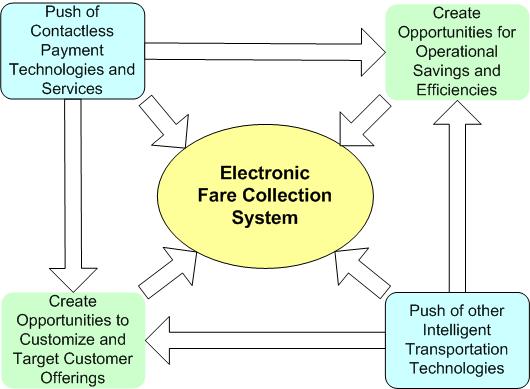
Prudent Transit companies are committed to ensuring that their business infrastructure leverages the electronic payments technologies and service developments which are changing the structure of everyday commerce. However these companies must also ensure that it makes wise choices. They need to adopt an Electronic Fare Collection System that avoids making costly short term capital investments in technologies that may be too proprietary or may become dead ended or become redundant in the medium to long term. Being an innovative “early adopter” requires entering into a business relationship with a solution provider that has the capability, enthusiasm and commitment to adapt and enhance the Electronic Fare Collection System to the inevitable transformational technological changes that will occur in the next 2-3 years
An example: The evolution of the contactless credit cards:
 Most transit operators today service hundreds of thousands to millions of clients who still pay for transit service, primarily, through small cash transactions. This is particularly true for small to medium size operators. The small cash electronic transaction market is still in the early stages of experiencing disruptive change due to the development of “Contactless Payment” technology and services. Major financial institutions have committed significant resources to introducing this alternative payment method. Prototyping, and testing has been underway for years (including some in Transit operations) and there is no doubt that this alternate payment method will gain market share and become pervasive in the medium to long term.
The introduction of new technology to process traditional small cash transactions provides an opportunity and a capacity to endlessly customize and target offerings and payments that are unique to each customer and transaction. There is no doubt that this disruptive technology juggernaut is inventible, outlining again the importance for the transport agence to carefully select technologies that are not too proprietary or may become dead ended or become redundant in the medium to long term.
Parternaires